- Open 24 Hours, 7 Days a Week
- Serving Lombard, IL & Nearby Suburbs
Winter Emergency Line · Open 24/7
No water on a frigid morning? A pipe that split overnight? Call Plumbing Lombard and we will get a local plumber to you for frozen and burst pipe repair, any hour of the day or night, all winter long.
Tell us what is happening and we will call you back right away. Water spraying? Call now instead.
Emergency? (630) 403-0888
~20°F
Outdoor temperature often cited as the danger point for pipes in unheated spaces.
9%
How much water expands as it freezes, building pressure inside the pipe.
55°F
Lowest thermostat setting the Red Cross recommends, even when you travel.
24/7
Our line is answered every night, weekend and holiday all winter.
Winter in DuPage County
From November through February, Lombard and the rest of DuPage County see long stretches of below-freezing weather, and arctic cold snaps regularly push overnight lows into the single digits or below zero. That is when the calls start: a kitchen faucet that will not run, a laundry line in the garage that froze solid, or a ceiling that starts dripping when a split pipe finally thaws.
Water expands about 9 percent as it turns to ice. When a section of pipe freezes, pressure builds between the ice and the nearest closed faucet until something gives. That is why a frozen pipe is more than an inconvenience. A single split pipe can release hundreds of gallons of water into your home, soaking drywall, flooring, insulation and everything stored in a finished basement.
Many homes in Lombard, Glen Ellyn, Villa Park, Elmhurst and Wheaton were built decades ago, with plumbing running through exterior walls, unheated garages and crawl spaces that were never well insulated. Older galvanized and copper lines in these spots are the first to freeze when temperatures drop.
When you call (630) 403-0888, we get a local plumber to you who can thaw frozen lines safely, find and repair splits, and help you protect the pipes most likely to freeze again.
Pipe frozen right now?
Warning Signs
Frozen pipes usually announce themselves on the coldest mornings of the year. Watch for these signs, especially after an overnight low below 20°F.
A faucet that gives only a trickle, or nothing at all, during a cold snap is the classic sign of a frozen supply line.
Visible frost or ice on pipes in the basement, garage or crawl space means the water inside is freezing too.
A bulge, split or crack shows the ice has already stretched the pipe. Shut off the main water and call right away.
A frozen drain or vent can trap sewer gas, sending unusual odors back up through sinks and tubs.
Banging, whistling or gurgling when you open a faucet can mean ice is partly blocking the line.
Damp drywall, dripping ceilings or puddles as temperatures rise often mean a pipe split while it was frozen.
Step by Step
Acting quickly can keep a frozen pipe from becoming a burst pipe. Here is the safe way to handle it while you wait for help.
Open the faucet the frozen pipe feeds, both hot and cold sides. As the ice melts, running water helps thaw the rest of the line and relieves pressure.
Follow the line from the faucet back toward where it enters the house. Frozen spots are usually along exterior walls, in the garage, in crawl spaces or near the basement rim joist. Look for frost or a bulge.
Warm the pipe with a hair dryer, an electric heating pad or towels soaked in hot water, starting closest to the faucet and working back. A portable space heater can warm a cabinet or room if it is kept a safe distance from anything that can burn.
Torches, propane heaters and charcoal stoves can start a fire, damage pipes and create carbon monoxide. Boiling water poured on a pipe can also crack fittings.
Fire and carbon monoxide riskIf one pipe froze, others may be close behind. Turn on each faucet in the house, including the laundry and any outdoor-facing bathrooms.
If you cannot find the frozen section, the pipe is inside a wall, the pipe is split or bulging, or water does not return after about 30 minutes, shut off the main valve and call (630) 403-0888. We will get a local plumber headed your way.
Water spraying? Shut off the main firstThawing Safely
Where Pipes Freeze
Pipes freeze where cold air reaches them. In Lombard and across DuPage County, these are the spots plumbers see most often.
Sinks on exterior walls are the most common frozen pipe in DuPage County homes. Cold air leaks into the cabinet and chills the supply lines.
Vanity and tub supply lines in exterior walls, especially in older homes with little insulation, freeze during long cold snaps.
Laundry hookups, water heater lines and pipes running along the garage wall are exposed to near-outdoor temperatures.
Vented or poorly sealed crawl spaces let frigid air reach supply and drain lines under the floor.
Pipes running along the top of the foundation wall sit right next to the coldest, draftiest part of the basement.
Hose bibs left with a hose attached trap water that freezes and splits the pipe inside the wall.
Plumbing in home additions, sunrooms and enclosed porches often has less insulation than the original house.
Pipes near dryer vents, foundation vents, windows or where utilities enter the house can freeze from drafts.
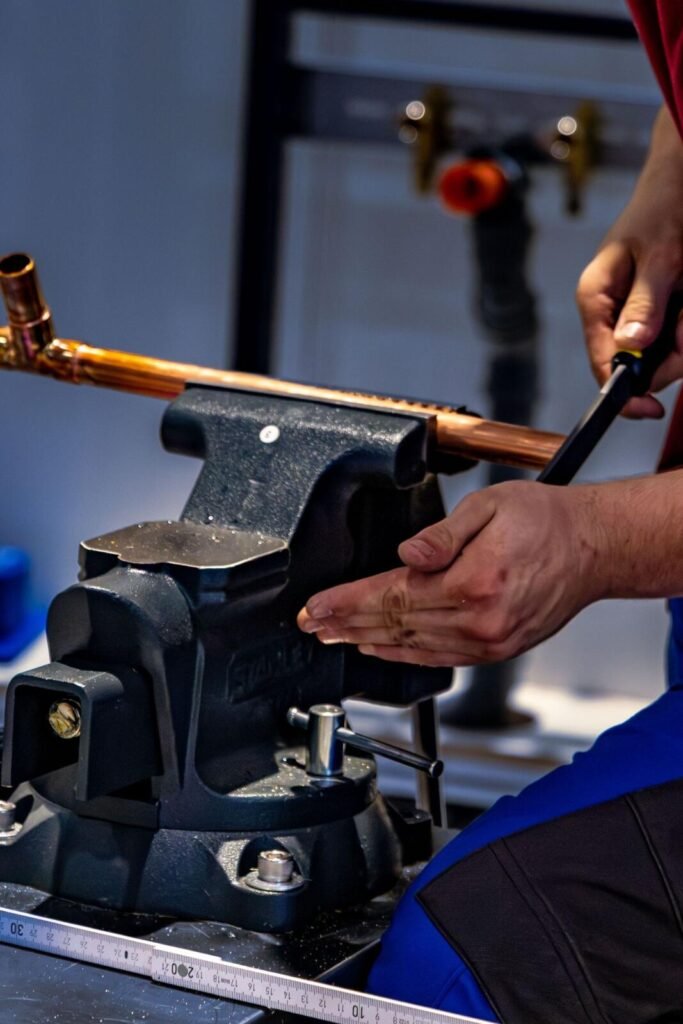
Burst Pipe Repair
Many burst pipes are not discovered until the ice melts and water starts pouring out of a wall or ceiling. If that happens, shut off the main water valve immediately and call (630) 403-0888 for a local plumber. Here is how a typical frozen and burst pipe repair works.
The plumber confirms the main water is off, checks for electrical hazards and finds every frozen or damaged section.
Frozen sections are warmed with professional thawing equipment, never open flame, so the rest of the system can drain.
Split copper, PEX or galvanized sections are cut out and replaced with new pipe and fittings sized for your system.
Water is restored slowly and the line is tested for leaks at every joint before the walls are closed.
Your plumber can recommend insulation, rerouting or heat cable for pipes that keep freezing in the same spot.
Prevention Checklist
Most frozen pipes can be prevented with a few simple steps. Use this checklist before winter, during cold snaps and any time you leave home.
October & November
When temps drop below 20°F
Holidays & winter trips
Temperature Guide
Pipes in heated living space rarely freeze. Pipes in unheated or drafty areas are another story. Use this guide when you check the overnight forecast.
Water in your pipes stays liquid. A good time to insulate exposed lines and disconnect hoses before the first hard freeze.
Pipes in unheated garages, crawl spaces and drafty exterior walls can begin to freeze, especially overnight or when wind pushes cold air through gaps.
Often cited as the point where unprotected pipes freeze quickly. Drip faucets on exterior walls, open cabinets and keep the heat steady day and night.
During arctic cold snaps, even pipes inside insulated walls can freeze. Check faucets morning and night and keep our number handy: (630) 403-0888.
Insurance Tips
Many homeowners policies cover sudden and accidental water damage from a burst pipe, but coverage can be limited if a home was left unheated or the damage built up slowly over time. Every policy is different, so call your insurer as soon as the water is off.
Before cleanup, take photos and video of the damaged pipe, walls, floors and belongings. Write down when you noticed the problem and what you did to stop the water. Ask your plumber for written notes on what failed and why. That record makes the claims process smoother.
Service Area
Based in Lombard, ZIP 60148, we help homeowners and businesses across DuPage County with frozen and burst pipe repair. When an arctic blast hits, call early. Plumbers get busy fast on the coldest mornings of the year.
FAQ
Answers to the questions Lombard homeowners ask most when the temperature drops. Still have a question? Give us a call.
The most common sign is a faucet that gives only a trickle, or nothing at all, on a very cold morning while other faucets work. You may also see frost on an exposed pipe, notice a bulge in the pipe, or smell an odd odor from a drain. If the water stopped during a cold snap, assume a frozen line until proven otherwise.
If you can see and reach the frozen section, you can usually thaw it safely with gentle heat from a hair dryer, heating pad or warm towels while the faucet stays open. If the frozen section is inside a wall, you cannot find it, the pipe is cracked or bulging, or water does not return after about 30 minutes of careful warming, call (630) 403-0888 and we will get a local plumber to you.
Shut off your main water valve right away, usually where the water line enters the basement. If water is near outlets or appliances, keep clear and switch off power to that area only if you can do it safely. Then call us for an emergency plumber, move belongings out of the way and take photos of the damage for your insurance company.
It depends on the temperature, wind and how exposed the pipe is. In an unheated garage or crawl space, a pipe can freeze within a few hours when outdoor temperatures fall well below 20°F. Pipes on exterior walls freeze faster when wind drives cold air through gaps in siding or around the rim joist.
No, but the risk is real. As water freezes it expands by about 9 percent, and pressure builds between the ice blockage and a closed faucet. That pressure can split copper, PEX fittings or older galvanized pipe. Many bursts are only discovered when the ice melts and water starts flowing, so check frozen lines closely as they thaw.
On the coldest nights, yes. A slow drip from faucets on exterior walls keeps water moving and relieves pressure in the line. Drip both the hot and cold sides of single-handle faucets, and open the sink cabinet doors so warm room air can reach the pipes.
The American Red Cross recommends keeping your thermostat set no lower than 55°F, day and night, including when you travel. Avoid deep nighttime setbacks during cold snaps, because that is when pipes on exterior walls are most at risk.
Many homeowners policies cover sudden and accidental water damage from a burst pipe, but coverage can be limited or denied if a home was left unheated or the damage built up slowly over time. Policies vary, so check with your insurer, take photos before cleanup and keep notes on what happened and when.
Kitchen and bathroom supply lines on exterior walls, plumbing in attached garages and crawl spaces, pipes near basement rim joists, and outdoor spigots. Older DuPage County homes with original galvanized pipe and less insulation are especially vulnerable.
PEX is more flexible and handles freezing better than rigid copper or galvanized pipe, but it is not freeze-proof. PEX can still freeze solid, and fittings and connections can fail under ice pressure. Insulation and heat are still your best protection.
Our line is answered 24 hours a day, 7 days a week, all winter long. We work to get an available local plumber to you as quickly as possible. Arrival times depend on location, weather and how many emergencies are happening at once, so ask about timing when you call.
Related Services
Leaking, corroded and burst pipes in every material.
Burst pipes, backups and flooding, 24/7.
No hot water during a cold snap.
Frozen discharge lines and winter thaws.
Hidden leaks after a pipe thaws.
Replace old pipe that keeps freezing.
Frozen or Burst Pipe?
Our line is answered 24/7 all winter. Call now for a local plumber in Lombard or nearby DuPage County.